
YOU’RE INVITED TO A LISTENING PARTY at STEREO STEREO
THURSDAY, MAY 21st 2026

Join Us For a Night of Musical Storytelling featuring Philip O’Hanlon, Distributor of Moonriver Audio
Mark Your Calendars for Thursday, May 21st
For our second listening party of 2026, Michael has chosen to feature one of Stereo Stereo’s newest brands, Moonriver Audio, as part of an analog system for a night focused on the joy of listening to music on vinyl. Your co-host for the evening will be Philip O’Hanlon, distributor of Moonriver Audio, an analog audio expert with a passion for music that crosses eras and genres.
Michael describes Philip as a fascinating storyteller with a deep love for, and knowledge of, music and high-end audio. Philip has planned a wonderful program of music across genres and eras. Attendees will enjoy a rich tapestry of sound, accompanied by expert insight and knowledge into not only the technical elements of the system but also the music itself, including details about the recording, the artist, the instrumentation, and more. Scroll down for a preview of some of the pieces that will be featured on the playlist for the listening party on the 21st.
LISTENING PARTY DETAILS
WHEN: Thursday, May 21st, 2026, starting at 6pm
WHERE: The Stereo Stereo showroom, 708 Warrendale Village Drive
WHAT: A night of analog music listening, food & wine with fellow audio enthusiasts & music experts
WHO: Bring yourself, your partner, friends, family, whoever might be interested in learning more about analog hi-fi music systems
RSVP: Email michael@stereostereopgh.comto let him know you plan to attend, or tap here to RSVP
Questions: Tap here for showroom contact info
THE PLAYLIST
Michael is always excited to open his doors for a listening party, but he’s particularly enthused about this one, thanks to the addition of Philip O’Hanlon’s musical expertise. Philip has planned a robust analog playlist for this event, complete with what he calls “music notes” for each piece, introducing extra color and insight to the listening experience.
Here’s a preview of a few pieces from the playlist, along with his notes.
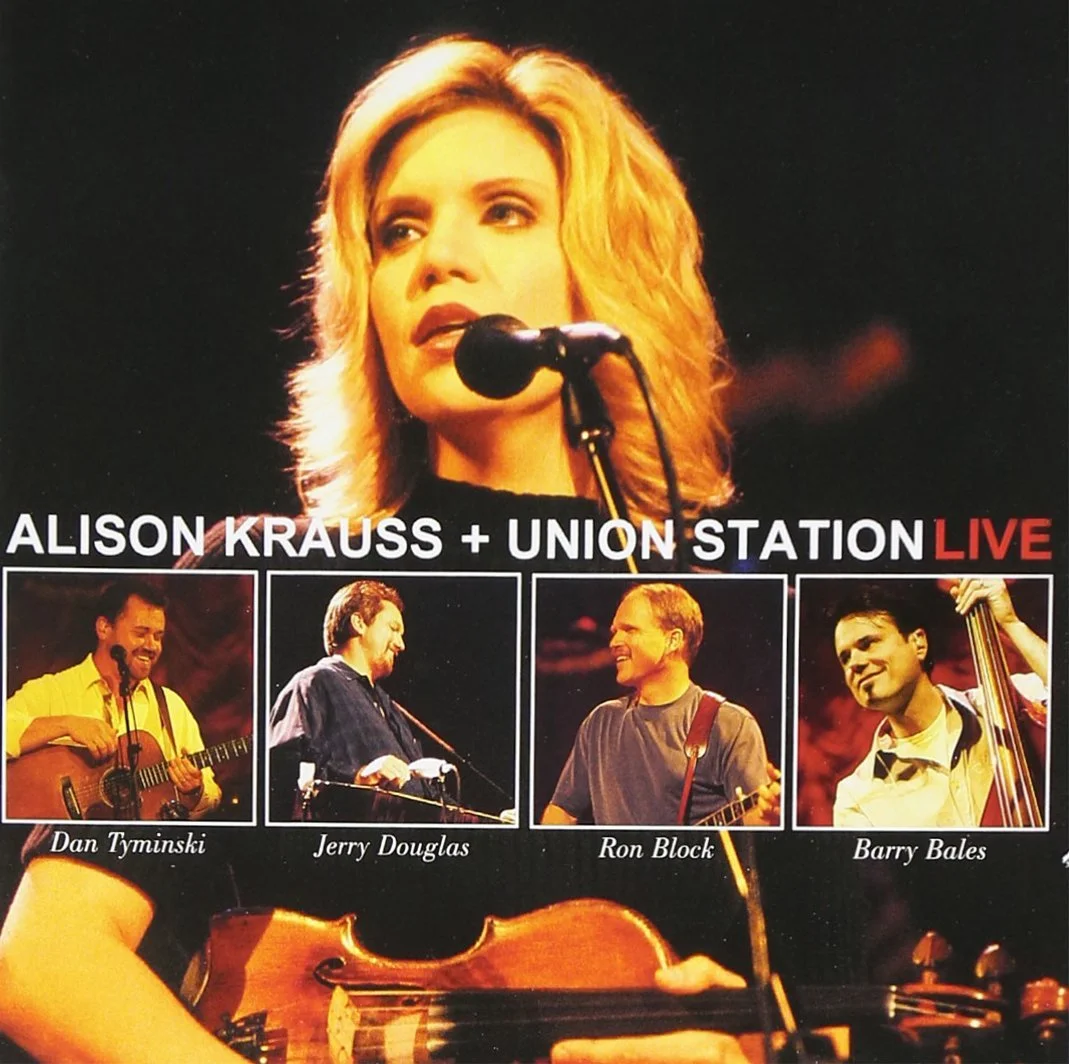
Alison Krauss & Union Station - Live 2002/2025
“Let Me Touch You For A While”
“Everytime You Say Goodbye”
Curtis Amy & Frank Butler - Groovin' Blue (Pacific Jazz 1961). Tone Poets.2025
“Gone Into It”
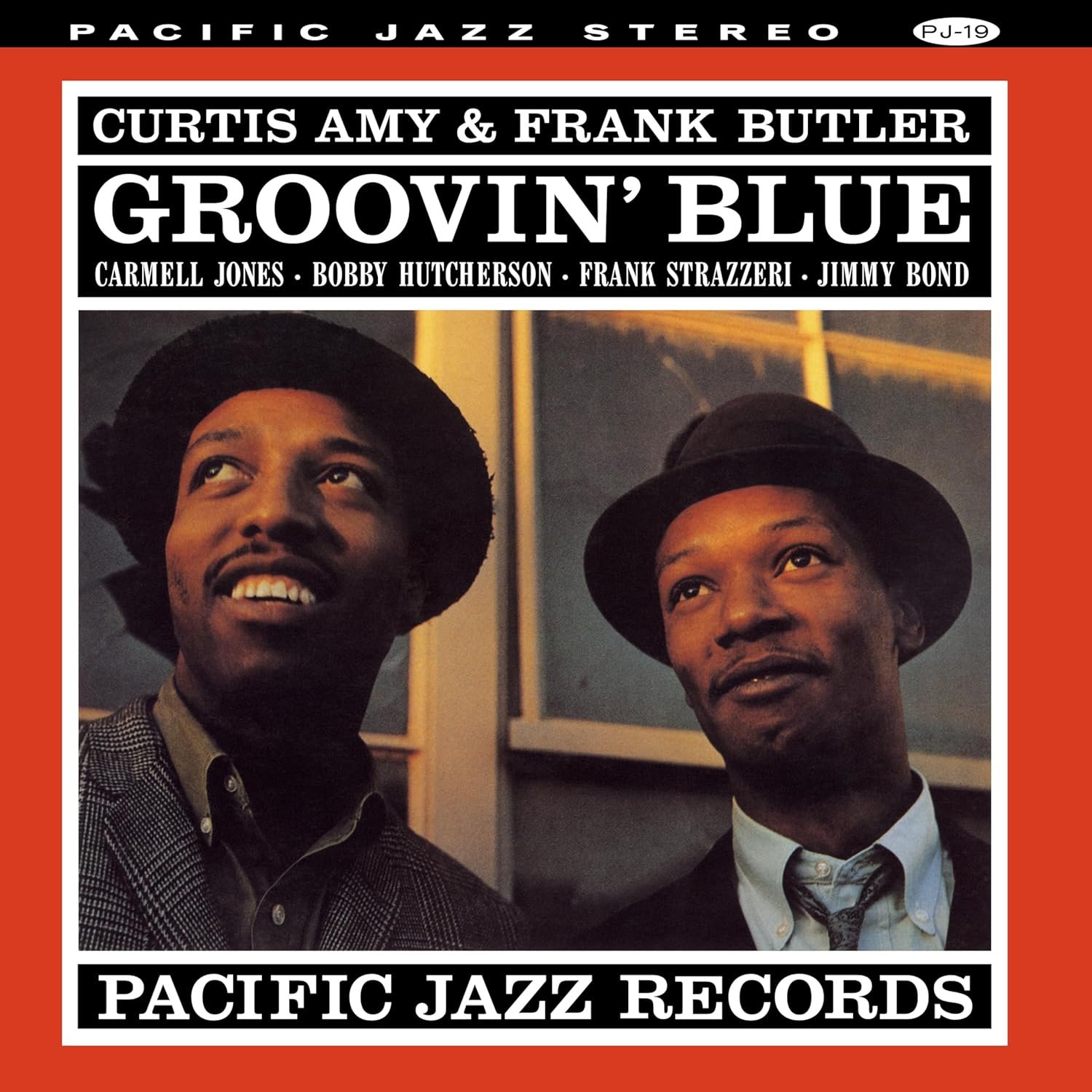
For many younger jazz fans, their first exposure to Curtis Amy may well have been on the Doors’ live performance of Touch Me, where he played tenor sax.
Amy arrived in Los Angeles in the late 1950’s, originally from Texas, where he recorded for Pacific Jazz. “Groovin’ Blue” was his second album for the label.
Frank Butler co-led this hard-swinging set of hard bop, infused with a nice dose of R&B. As a session musician, Frank Butler had already played with Art Pepper, Ben Webster, Dave Brubeck, Curtis Counce, Hampton Hawes, Harold Land…
Amy & Butler were certainly groovin’ with Carmell Jones on trumpet (his recording debut), Bobby Hutcherson on vibraphone, who was only 19 at the time, Frank Strazzeri on piano, and Jimmy Bond on bass.
Groovin’ Blue kicks off with a Curtis Amy & Frank Butler’s composition “Gone Into It” - a driving hard bop number, driven initially by Amy’s sax, before handing over to the trumpet, then Hutcherson’s vibes, all the while the groove is locked down steady by the rhythm section of Bond on bass & Butler on drums. Strazzeri delivers some lovely, tasty piano.
Butler kicks Annsome off with a short but sweet solo, and sets the pace for the other musicians to breathe & expand on the melody. It sounds as if everyone is enjoying themselves & the band is cohesiveas if he’s a drummer kid in the second line. .
Beautiful You is a ballad that revolves around Bobby Hutcherson’s melody, and certainly is sensual & romantic, as befits its title.
This is one of those obscure jazz titles that, up until now, was almost impossible to find in great condition.
Originally released in 1961, re-released in 1965, then in 1975 in South Africa, 1992 in Japan. Let’s forget about the dubious provenance of the Spanish reissue of 2016. The Blue Note Tone Poet reissue of 2025 is certainly the album to buy.
Annie Lennox - Diva. 1992 180 gram reissue 2019
“Cold”
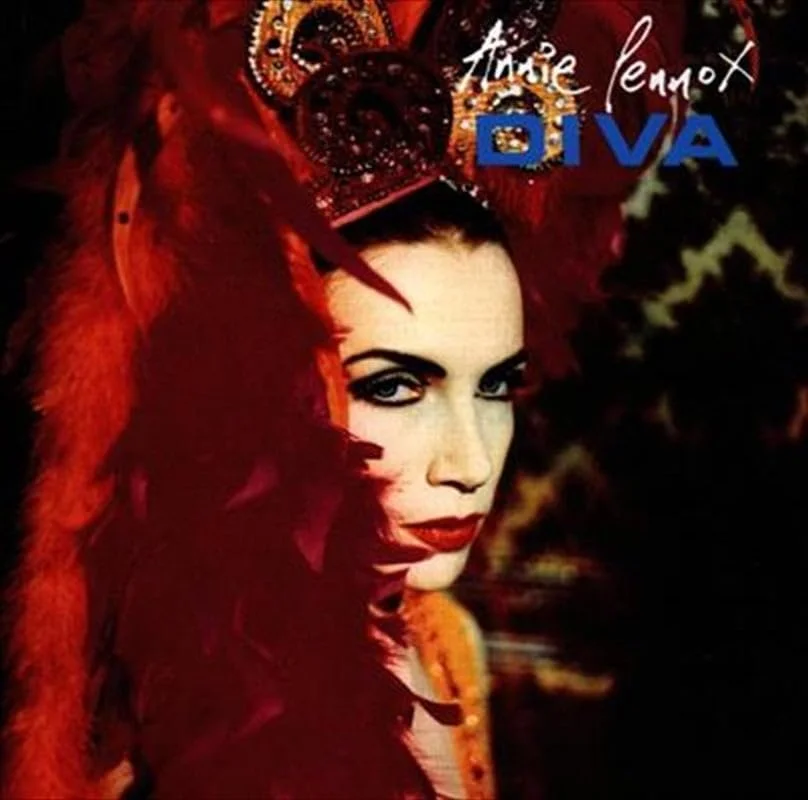
Annie Lennox’s 1992 solo debut was a joyous and liberated pop album with an underlying message about her disillusionment with fame.
After disbanding the Eurythmics, Annie Lennox got married again, and while she was pregnant with her daughter, Lola, she sat down and wrote her first solo album, “Diva”. Without the help of Dave Stewart, from the Eurythmics, she was left to do this alone; it took her 15 months. But she enrolled synth pyrotechnician Marius de Vries, and she recorded at her home in Maida Vale before and after Lola’s birth. She also enlisted producer Steve Lipson (Paul McCartney, Simple Minds, Propaganda, Grace Jones, Frankie Goes To Hollywood) to guide her to completion and encourage her through her writer’s block, from time to time.
Diva was Annie Lennox’s declaration of independence; no longer the voice and the androgynous beauty, she took control of her own career and showed that she could write her own music, quite distinct from the Eurthymics, less synth pop and more soul-pop.
“Precious” celebrates Lola’s birth: “I was lost until you came,” she sings from the soul, her words thick with sentimentality, gratitude, and a newfound maturity.
“Cold,” a bitter-sweet love song, full of regret.
After a decade of Dave Stewart’s electronics, Lennox sat down and wrote Diva on the piano; it was the vehicle for her liberation. Though Diva was a huge hit in the UK, she did not tour the countryside to promote the album, but stayed at home and had a second child. She chose to walk away from fame and enjoy a private life. Good for her.
First UK pressings are hard to find, especially quiet and not abused. In fairness, the 2019 reissue on 180-gram vinyl sounds terrific.
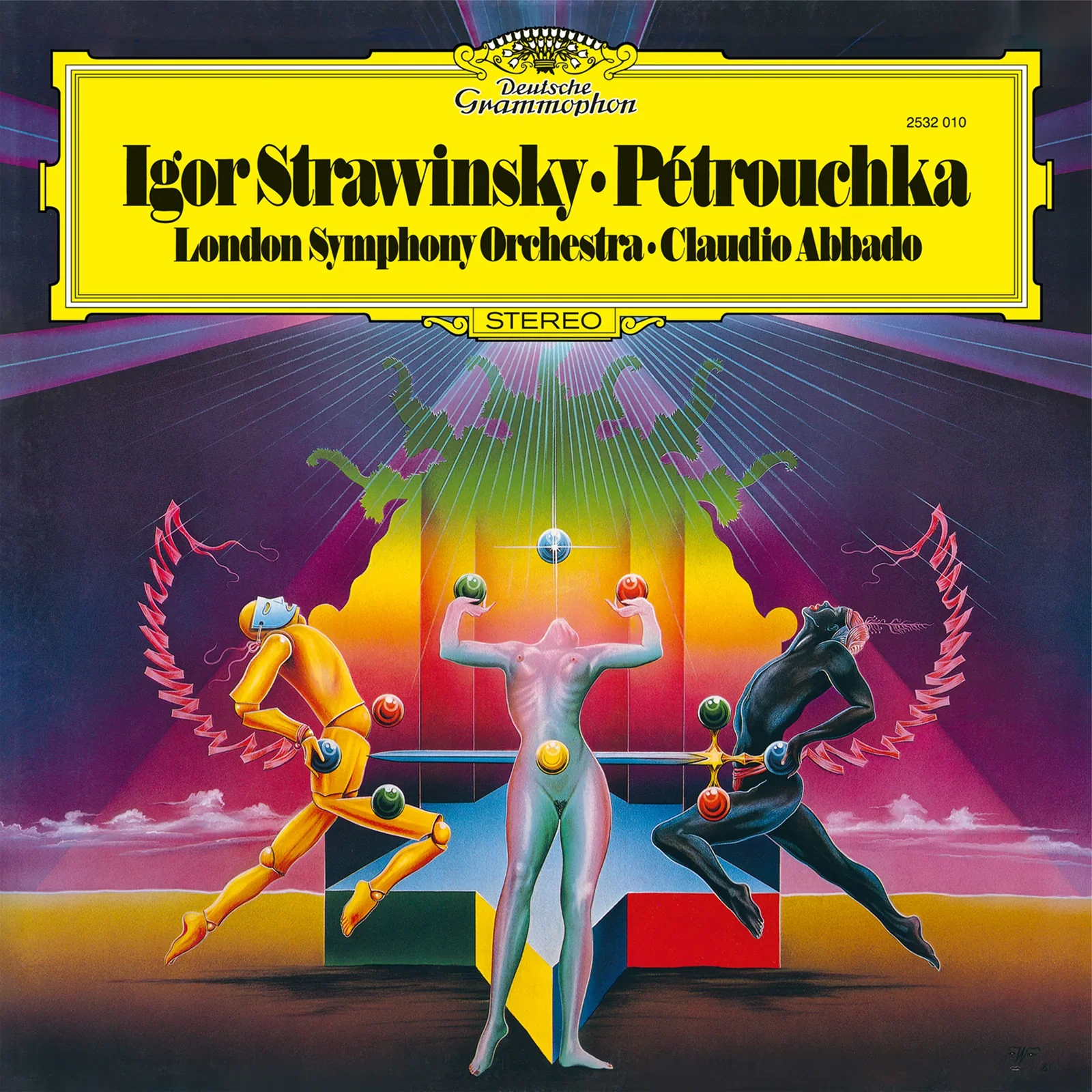
Stravinsky - Petruška - Abbado, LSO. 1976 / 2026
“ First Tableau - The Shrove-tide Fair”
I can clearly remember when this album was first released on the SACD format. Not only is Alison Krauss found here in fine voice, not to mention a fine violinist, but she blends pristine bluegrass, country, and folk with impeccable instrumental skill and beautiful vocal harmonies. She is surrounded by terrific musicians, such as Dan Tyminsky on guitar & vocals, who sang “I Am A Man of Constant Sorrow”, in the movie “Oh Brother, Where Art Thou?” as well as virtuoso dobro player Jerry Douglas.
Krauss’ unexpected breakthrough into mainstream pop with “Baby Now That I’ve Found You” is blissful, and her vocal pitch is unwavering. I am sure even the angels have taken note of her vocal talent.
The album opens with “Let Me Touch You For Awhile.” Ms Krauss immediately wins you over; the emotion is heartfelt, while she is accompanied by the immaculate dobro picking of Jerry Douglas. She makes full use of the beautiful harmonies of the backing musicians.
The second song, -"Choctaw Hayride”, is an instrumental, while Krauss is on violin, it’s the ideal vehicle for Jerry Douglas to showcase his virtuosic skills on dobro.
There usn’t enough space to cover every song here, but some personal favourites:
“Ghost in This House” - Krauss’ singing is sublime, accompanied by Douglas’ picking on his dobro, while Barry Bales (bass), Dan Tyminski & Ron Block (guitar) sing in perfect unison. Perfection.
"Forget About It" starts out with a sparse accompaniment of dobro and Dan Tyminski on mandolin. Before the band slips into gear, these are all highly skilled musicians who give each other enough space to shine.
Tyminski’s rendition of “I Am A Man Of Constant Sorrow” ( traditional ) is bluegrass at its finest. In the video, he earns a well-deserved standing ovation. This is clearly a band with all members embracing the group concept while Alison Krauss’ voice soars & shimmers over “Maybe” and “When You Say Nothing At All”.
Originally released in 2002 on SACD, it was first released on LP by Mobile Fidelity in 2006. Craft reissued this album last year.
Stravinsky composed Petrushka as his second ballet for Diaghilev’s Ballet Russe. This came after the spectacular success of Stravinsky’s The Firebird. Petrushka premiered in Paris on 13 June 1911. In 1947, Stravinsky revised Petrushka to secure new copyright protection. As the original 1911 version had fallen into the public domain, in many countries, including the USA. Abbado used the 1947 Boosey and Hawks rescored version for a smaller orchestra.
Petruška tells the story of a love triangle among three puppets. The ballet begins at the Admiralty Square in St. Petersburg during the 1830s at the Shrovetide fair; our hero, Petruška is in love with the ballerina, who, in turn, is enchanted by the Moor. A crowd gathers around the magician who presents the three puppets in a small theatre. He charms them into life with his flute, and to the audience's delight and surprise, the puppets come down from the stage and dance amongst the crowd.
In the second Tableau, Petrushka is dejected, as he has failed to win over the beautiful ballerina; he is sad and rues the fact that he was given life, only to find that the Ballerina has fallen for another.
In the third Tableau, Petrushka enters the Moor's room and interrupts the Moor and the ballerina, but the Moor casts Petruška out.
In the fourth Tableau, we return to the main Square, where an altercation ensues between the Moor and Petrushka. The Moor strikes Petrushka down with his scimitar. The crowd is horrified, so the Magician is summoned to the scene, as well as a police officer. The Magician reminds everyone that Petrushka is nothing but a puppet made of straw and cloth, and so cannot have either real emotion or 'life'. As the crowd disperses, the showman is left alone onstage.
Petrushka's ghost rises above the puppet theatre as night falls. He shakes his fist and thumbs his nose at the Magician, making the Magician flee in terror. Petrushka then collapses to a second death.
Nikolai Myaskovsky, acclaimed Russian composer and a friend of Stravinsky’s, wrote in his review of the work, “Is Stravinsky’s Petrushka a work of art? I don’t know. Can one call life a work of art? That very life that roars all around us, that calls forth our wrath and our joy, that weeps, that rages, that flows in a swift, broad current? For Petrushka is life itself. All the music in it is full of such energy, such freshness and wit, such healthy, incorruptible merriment, such reckless abandon, that all its deliberate banalities and trivialities, its constant background of accordions not only fail to repel but, quite the contrary, carry us away all the more…The music of this extraordinary ballet has such integrity, energy, and such inexhaustible humor that one positively loses all desire to attempt a more detailed analysis – it would be like a vivisection.”
Recording
DG, when they originally recorded Abbado & the LSO in 1976, were unsure of the new digital format, so they also recorded the performance on an 8-track analogue tape recorder. The original LP and cassette were made from the digital recording. In 2025, DG’s Original Source Series remixed & remastered the same performance from the 8-track tape analogue recording. We have compared many of the first pressings on LP to the recent Original Source reissues and can confidently state that the analogue reissues are superior to their digital counterparts. The analogue reissues are not only more resolute, but offer a fuller, richer midrange, with greater tonal colour.